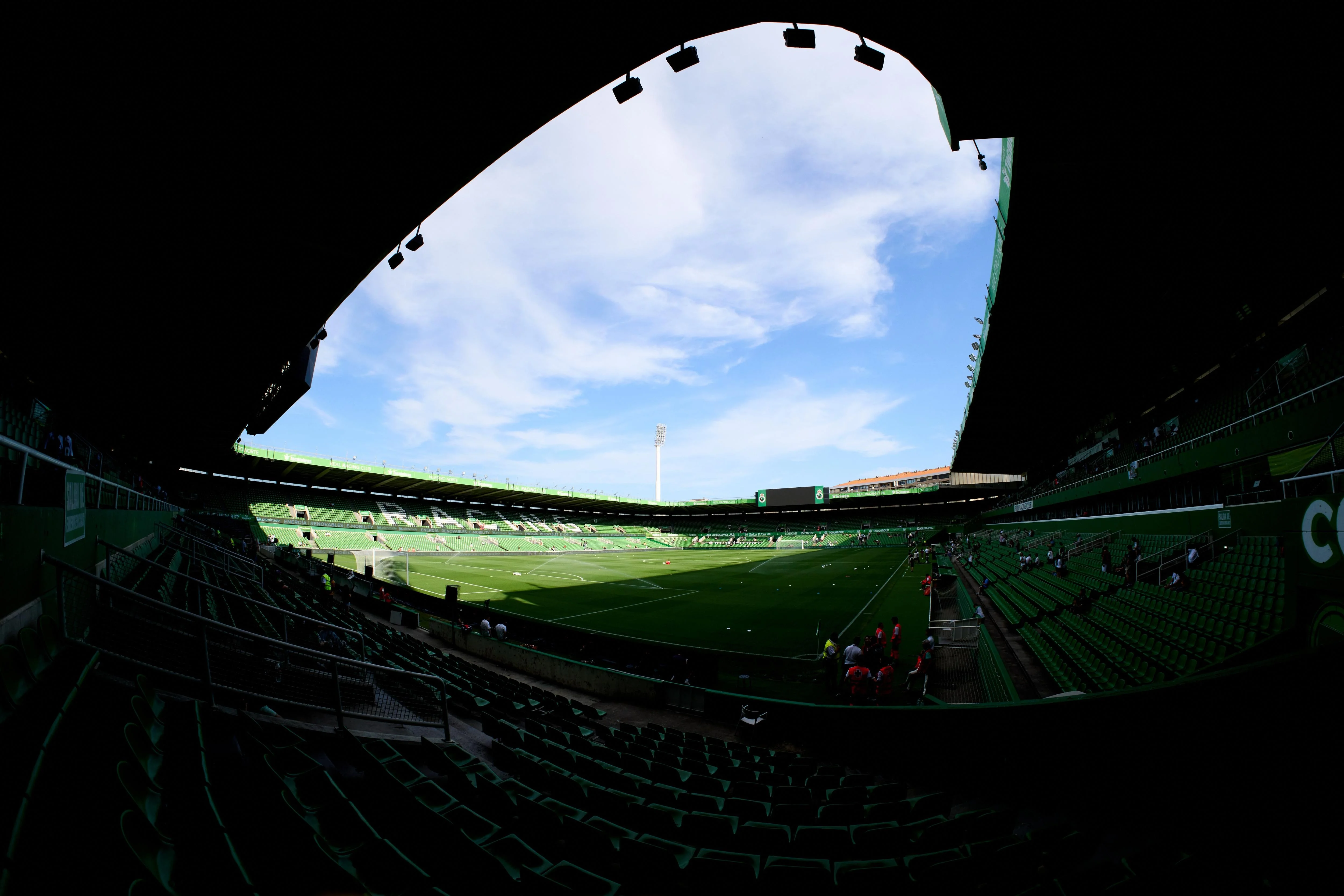
Barcelona’s Saturday win means Real Madrid need points at Racing Santander to maintain pressure on Hansi Flick’s side. The match comes a week after Madrid’s El Clásico victory, and takes place away from the Bernabéu. That timing gives the fixture a simple but demanding shape: Madrid have just beaten their closest rival, yet the result has little lasting value in the title race if they don’t follow it with points on the road.
There’s a familiar tension in that setup. A major win can lift a team, but it can also make the next match harder to manage if the players treat the previous result as proof that the job is done. Madrid’s challenge is to turn the confidence from El Clásico into disciplined work against an opponent with the home crowd behind it. Racing, meanwhile, have the chance to disrupt a side expected to control the contest.
Predicted lineups
Racing Santander: Agirrezabala; Mantilla, Pablo Ramón, Belocian, Aarón Martín; Iván Martín, Almeida; Pablo García, Canales, Iñigo Vicente; Zabiri.
Real Madrid: Courtois; Dumfries, Konaté, Rüdiger, Carreras; Tchouaméni, Bernardo Silva; Güler, Bellingham, Diomande; Mbappé.
These are predicted lineups, so they offer a reading of the possible plan rather than confirmation of who’ll start. The names suggest a Madrid side built around a central pair in midfield, with a more advanced group positioned to support Mbappé. If that shape is used, the balance between protecting the defense and getting enough players forward will matter. A lineup can show a coach’s intent; it can’t guarantee how the match will unfold.
The listed Racing team has a compact midfield structure, with two players behind a line of three attacking midfielders and a forward. That arrangement could help the hosts crowd the central areas and make Madrid work to find room between the lines. The details depend on positioning and movement, of course. A nominal formation is only a starting point: teams shift shape when they press, defend deep, or win the ball.
Madrid’s predicted back four and two deeper midfielders also point to a practical question: how much risk will the visitors accept when they attack? Fullbacks can provide width, but their forward runs may leave space behind them if possession turns over. That tradeoff is common in matches where one side is expected to have more of the ball. The answer may shape whether Madrid can sustain pressure without giving Racing inviting counterattacking opportunities.
For the hosts, the opportunity is to make the favorite uncomfortable. That doesn’t require Racing to dominate possession. A well-timed press, a compact defensive block, or quick attacks after recovering the ball can all change the rhythm. Madrid will need to read those moments clearly. If you’re working in this space, the key tactical question is whether the visitors can keep their attacking spacing while still protecting the areas Racing may target in transition.
Match details and broadcast
Date: January 11, 2026
Time: 16:15 CET (10:15 a.m. EST)
Venue: El Sardinero, Santander, Spain
TV: DAZN La Liga in Spain; ESPN Deportes in the U.S.
Streaming: ESPN+ in the U.S.
The venue matters because Madrid are away from the Bernabéu, where they’re accustomed to playing in front of their own supporters. An away match adds small pressures that can become significant: the home crowd reacts to tackles and clearances, the favorite may have less patience if the match stays level, and the hosts can draw energy from each spell of resistance. None of that decides the result on its own. It does make an early goal, or an early sign of control, especially useful for Madrid.
The broadcast information gives viewers in Spain and the United States a direct route to follow the match, though availability depends on the listed service and territory. The different TV and streaming options also reflect how football audiences now follow domestic competitions across separate platforms. For a match with title-race consequences, access is part of the practical story: viewers need to know not only when kickoff begins, but where the game is being carried.
What the result could mean
For Madrid, the immediate task is clear: take care of business on the road and keep the title pressure on Barcelona. Barcelona’s Saturday win raises the stakes of Madrid’s response because the gap between a strong week and a missed opportunity can be one result. A win would keep the contest tight in the way the source describes; dropped points would give Barcelona more room to set the pace.
This is more significant than it looks. The match may not carry the profile of El Clásico, but league campaigns are shaped by the less glamorous fixtures that follow the headline games. A title challenge depends on repeatedly collecting points when the opponent is less celebrated and the setting is less familiar. That’s where focus becomes a competitive asset.
And yet, the pressure cuts both ways. Racing can approach the game with the freedom of a home side facing a major opponent, while Madrid have the clearer expectation to win. That difference doesn’t tell us how either team will perform, and it shouldn’t be mistaken for a prediction. It does help explain why Madrid’s first priority is likely to be control: avoid giving Racing an emotional foothold, then make their quality count.
(And this is the part most people overlook.) A team doesn’t have to look dominant for all ninety minutes to get the result it needs. Madrid may have to manage stretches when Racing defend well or push forward, and the response to those periods could matter as much as the attacking names on the predicted sheet. Patience, recovery runs, and clean decisions in possession are less dramatic than a goal, but they can help create the conditions for one.
Here’s the thing: Madrid’s El Clásico win has already made a statement, but the title race won’t be settled by statements alone. The visitors need to carry that momentum into a different kind of contest, against a home team with reason to make the afternoon difficult. The result will say more about the league table than any single tactical detail.
For viewers, the central question is straightforward: can Madrid turn a high-profile victory into routine league points? That’s a useful test of their concentration and their ability to adjust away from home. Not a coronation, and not a crisis. Just another match with real consequences.