Ballon d’Or: a narrow miss for Mbappé
Harry Kane has won the 2026 Ballon d’Or, with Kylian Mbappé missing out by fewer than 40 points. That narrow margin gives Real Madrid’s talisman a clear target for the rest of the season: turn an exceptional individual campaign into an even stronger one.
Mbappé finished the season as the top scorer at the World Cup, Champions League and La Liga, according to Madrid Zone. Those scoring honors make the result harder to reduce to a simple question of goals. The award reflects a vote, and a near miss suggests the voters saw a close contest rather than a campaign with an obvious winner. Madrid Zone says the gap was even smaller than Viní Jr.’s 41-point deficit to Rodri in 2024.
That comparison gives the margin some historical context, though it doesn’t explain how voters weighed the seasons or which performances proved decisive. A points gap can show how tight the final tally was; it can’t, on its own, tell us what changed individual ballots. For Mbappé, the immediate significance is more practical: he has a recent benchmark to chase, and the award has made that benchmark unusually visible.
El Clásico, in the aftermath
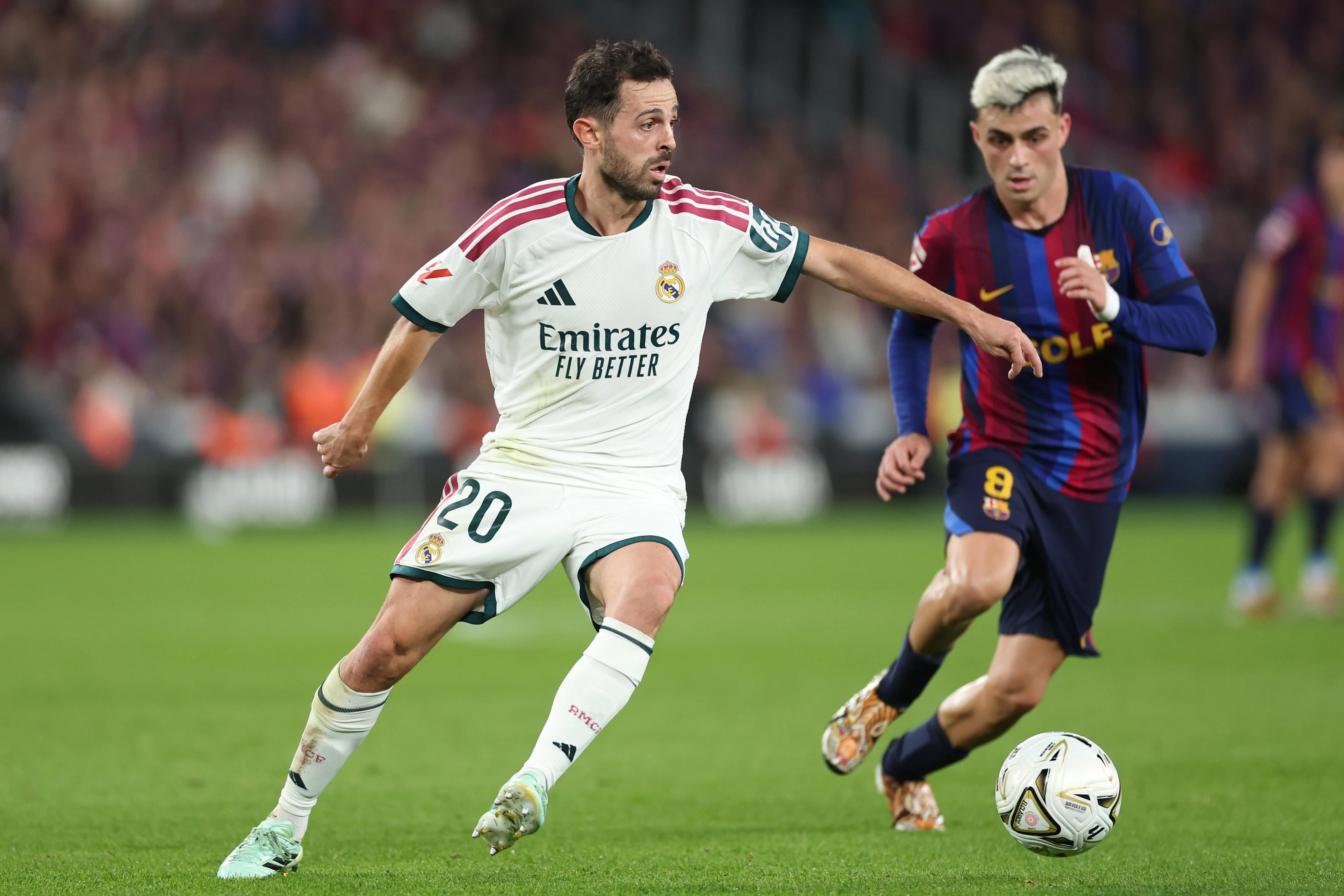
Real Madrid’s win over Barcelona at the Camp Nou on October 25 also features in the day’s discussion. The club shared behind-the-scenes footage the following day, while analysis focused on the midfield and José Mourinho’s approach to containing Barcelona’s attack. That shift from the result to the preparation matters: the public recap is a reminder that a high-profile win is shaped by decisions made before and during the match, as well as by the moments that make a highlight reel.
Behind-the-scenes footage can give supporters a sense of the occasion and the people around the team, but it offers only a partial view of the work that produced the result. Tactical commentary fills in another part of the picture, especially when it explains how a side intends to cope with an opponent’s attack. Still, a stated plan and its execution are different things. The match discussion links the two, while leaving the detailed evidence to the analysis itself.
Bernardo Silva’s composure in midfield
Managing Madrid’s assessment highlights Bernardo Silva’s willingness to show for the ball in deep positions. The point is his control under pressure: he receives calmly, chooses a pass or carries forward, and remains available as play develops. In a midfield where some players can disappear during build-up, that instinct stands out. It also speaks to a less visible part of midfield work: offering a safe option early enough to help teammates move the ball out of tight areas.
Receiving deep doesn’t guarantee progress. A player still has to judge whether the next move is a pass, a dribble or simply holding possession until support arrives. That decision can shape the rhythm of an attack, because a composed outlet gives teammates another route through pressure and can keep the team connected. Here's the thing: these actions rarely carry the drama of a goal, yet they can determine whether a team gets to build one.
Mourinho’s reported plan for El Clásico follows a related logic. Madrid Zone says he believed simply defending deep would not be enough against one of the world’s best attacks; the intention was to build a team able to withstand pressure when Barcelona had the ball. That distinction matters. Sitting back can limit space, but a side also needs ways to remain organized and respond when pressure arrives. The post describes the plan in broad terms, not a full tactical breakdown, so it’s best read as an outline of the intended approach.
If you're working in this space, the useful question is how a team handles the transition from defending to playing out. A midfield outlet can relieve pressure, while a plan built around absorbing it can give players a clearer response when possession changes. The pieces connect, though the available posts don’t establish that Bernardo’s role was designed as part of Mourinho’s specific plan. A careful reading keeps that distinction intact.
What the result leaves in view
The Ballon d’Or result and the Clásico conversation offer two different measures of a football season. One is an individual ranking, decided by a narrow vote; the other is a team performance that invites scrutiny of collective choices and execution. Mbappé’s scoring record puts the award margin in sharp relief, while the Madrid discussion turns attention to the less conspicuous work of holding shape, showing for the ball and choosing the right moment to advance.
For Madrid, the Ballon d’Or result leaves a fine margin to chase, while the Clásico footage offers a reminder of the tactical detail and midfield judgment behind the win. The numbers here are underwhelming as an explanation: fewer than 40 points tells us the race was close, but not why Kane prevailed. The more durable question is whether Mbappé can sustain the level that put him within reach, and whether Madrid can keep translating individual quality into performances that hold up under pressure. That’s the test the season now sets.