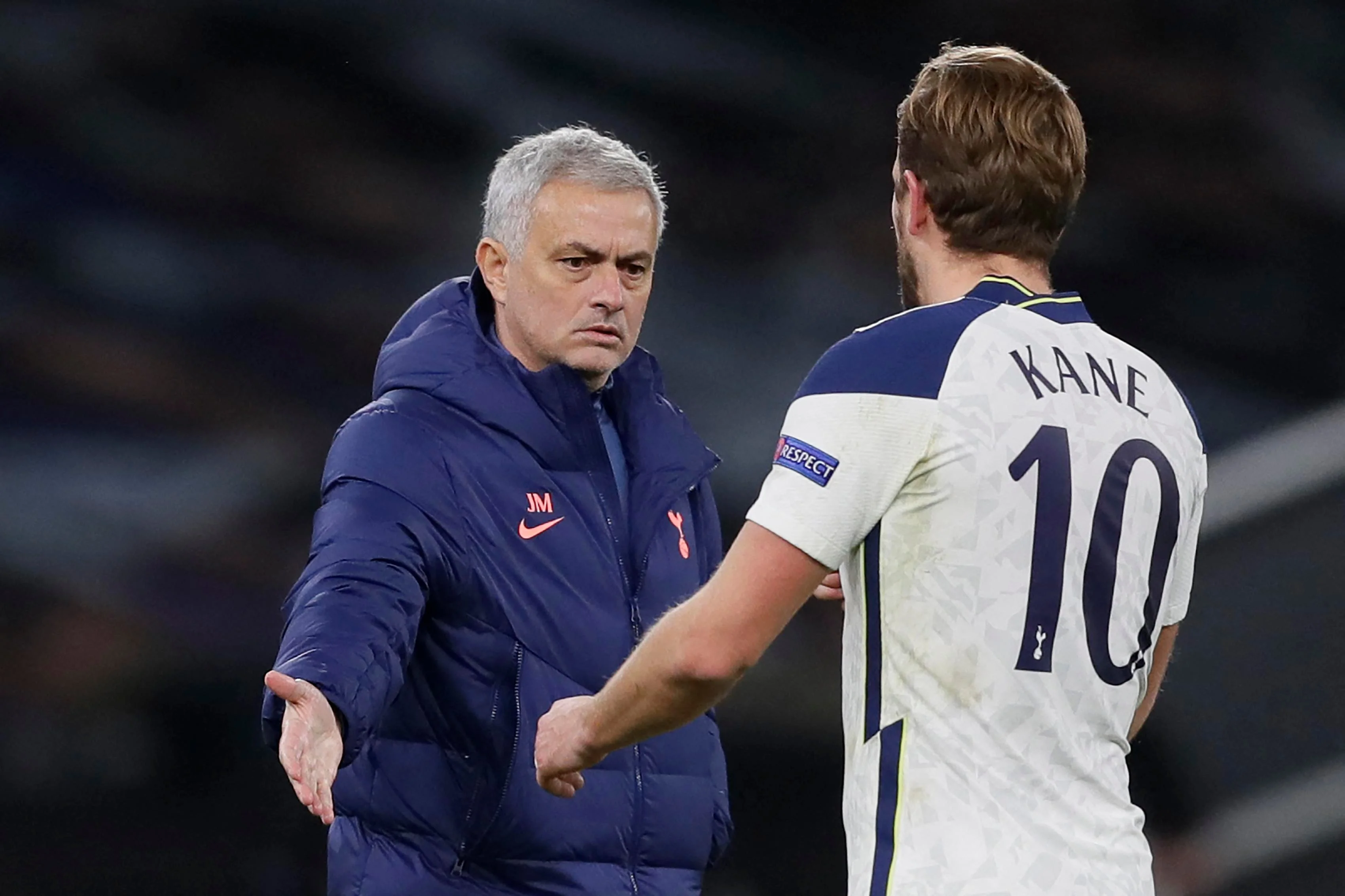
Harry Kane’s 2026 Ballon d’Or victory puts a new frame around an early conversation with José Mourinho. In footage filmed after Mourinho took charge at Tottenham, Kane said he wanted to reach the level of Lionel Messi and Cristiano Ronaldo; Mourinho answered that he could help the striker’s reputation travel beyond England. The exchange wasn’t a forecast of a particular award or a promise that their partnership would deliver a trophy. It was a glimpse of the scale Kane had in mind, and of Mourinho’s belief that a player’s standing depends partly on where and how he’s seen.
A conversation about global stature
The exchange, filmed for Amazon’s All or Nothing: Tottenham Hotspur, came soon after Mourinho took charge in 2019. He told Kane that English football commanded enormous respect, yet football’s biggest stars were still seen as coming from elsewhere. That distinction matters: respect for a competition doesn’t automatically make its players international icons. Mourinho was talking about a gap in perception, one that even a leading English striker might have to work to close.
“The world looks to English football with an incredible respect, but they still think the movie stars of football belong to other places,” Mourinho said.
Mourinho cast himself as someone who could help change that perception for Kane. Drawing on his own standing in the game, he described how working together might give the striker’s reputation a lift, punctuating the thought with an explosive gesture. The delivery was theatrical, but the underlying argument was familiar: elite players need a stage, strong performances, and attention that reaches beyond their immediate club audience. A coach can shape that story, though he can’t control how it’s received.
Kane answered with a clear target: he wanted to reach the level of Messi and Ronaldo. He had already helped Tottenham compete near the top, while Mourinho said winning was a requirement for him at any club. That pairing of personal ambition and collective expectation is revealing. Kane wasn’t describing a wish to be celebrated simply for scoring; he was setting his sights on the kind of status associated with sustained achievement at the highest level. This is more significant than it looks. Naming those two players made the ambition unusually plain, while also setting a standard few careers can meet.
Ambition outlasted the partnership
Mourinho and Kane left Tottenham without a trophy together. Kane’s Ballon d’Or win has brought their first meeting back into view, and the striker included Mourinho among the coaches he thanked in his acceptance speech. That acknowledgment doesn’t erase the limits of their time together, but it does suggest the relationship retained meaning beyond its results. A short conversation recorded for a documentary now carries a different weight because the ambition it captured has a clear ending point: Kane reached football’s most prominent individual honor.
There’s a tension here. Mourinho spoke about visibility and winning as connected parts of a player’s rise, but their partnership didn’t produce a Tottenham trophy. Kane’s eventual recognition therefore can’t be presented as proof that Mourinho’s plan worked in full. It’s better read as a record of how openly Kane understood the scale of his own goal, and how Mourinho tried to frame the path toward it. The outcome belongs to Kane’s career as a whole, not to one exchange or one coach.
What the moment means in retrospect
The clip also shows how elite ambition can sound before it has been validated by the outcome. At the time, Kane’s comparison with Messi and Ronaldo was a statement of intent; in retrospect, the award gives that sentence an answer the original conversation couldn’t supply. The difference between those moments is the difference between confidence and achievement. Here’s the thing: the footage is compelling because it preserves the ambition before the recognition arrived, without turning the conversation into a prophecy.
For readers following football’s global stardom, Mourinho’s point remains a useful one. Reputation is built through performance, but it’s also shaped by the competitions, teams, and public stories surrounding a player. (And this is the part most people overlook.) A coach may help create the conditions for recognition, yet the player still has to deliver over time. If you’re working in this space, the exchange is a reminder that visibility and accomplishment can reinforce each other, but they aren’t interchangeable. Kane’s award gives the conversation its resonance; the years of work behind it give the award its substance.
A striking ambition. A partnership without a shared trophy. And a later honor that makes the old footage worth watching again.