Harry Kane’s rapid rise at Tottenham turned Roberto Soldado’s place in the squad into a struggle he says he couldn’t sustain. The Spaniard’s account offers a personal view of how a young striker’s steady stream of goals reshaped the club’s pecking order. It also shows how competition can feel different from inside the dressing room: a player may understand why a teammate is getting minutes and still find the experience hard to bear.
Kane’s momentum changed the competition
Soldado joined Spurs from Valencia in 2013 after a season of 30 goals and five assists in 40 matches. Tottenham paid about €30 million for him, but his output in England fell short of that form: he recorded 16 goals and 11 assists across 76 appearances. The gap between those records helps explain the pressure around his move. A striker arriving with a strong scoring record and a substantial fee attached is expected to make an immediate mark, and the team’s patience can be tested when goals don’t come at the same rate.
Kane returned from a loan at Leicester City in the summer of 2013 and spent the next decade with Tottenham’s first team. He scored 280 goals and supplied 63 assists in 435 appearances. His first season brought four goals and two assists; in 2014/15, he surged to 31 goals and six assists. That rise gave the club a compelling reason to give him more responsibility. For a forward already in the squad, the change wasn’t just a matter of a promising youngster arriving; it was a teammate turning chances into a case for more playing time.
Soldado, who played for Spurs from 2013 to 2015, told Deportes COPE Valencia that Kane’s growing role made his own situation “unbearable.” He left for Villarreal in 2015. He had previously described his time in England as a period in which he “suffered a lot.” His comments frame the change as a personal ordeal, but they also describe a familiar sporting dynamic: selection follows performance, and a player who keeps scoring can quickly alter the options available to a manager.
“He’d come up to train with us, and in training you’d see him finish and you’d say, ‘Damn, this kid’,” Soldado said. The memory puts Kane’s progress in the daily setting of training, before the season’s goal totals could make the scale of his rise obvious. For Soldado, the warning signs were visible in the finishing itself.
“We played in the Premier League, the Europa League, and the FA Cup and Carling Cup. The kid would come on, get minutes, and score goals, and score goals, and score goals. It crushed me, it crushed me.” The repetition captures the wear of watching the same pattern play out across competitions. Each goal strengthened Kane’s claim to another opportunity, while Soldado’s own route into the team narrowed.
“He kept earning more and more minutes in every competition, and well, he overtook us, like a rocket.” That’s the sharpest summary of the shift: Kane’s rise wasn’t confined to one match or one competition. It accumulated through repeated chances and goals. The effect on Soldado was personal, but the mechanism was straightforward.
A rise that kept paying off
Soldado’s comments followed Kane’s 2026 Men’s Ballon d’Or win in London, where the former Spurs striker finished ahead of Kylian Mbappé and Lamine Yamal. Kane had scored six goals and provided an assist for England at the 2026 World Cup. Those later achievements give Soldado’s recollection a long arc: the player who once came up to train with the senior group became a leading striker at club and international level. That doesn’t make the years at Tottenham easier for Soldado, but it does underline how early Kane’s ability had caught his attention.
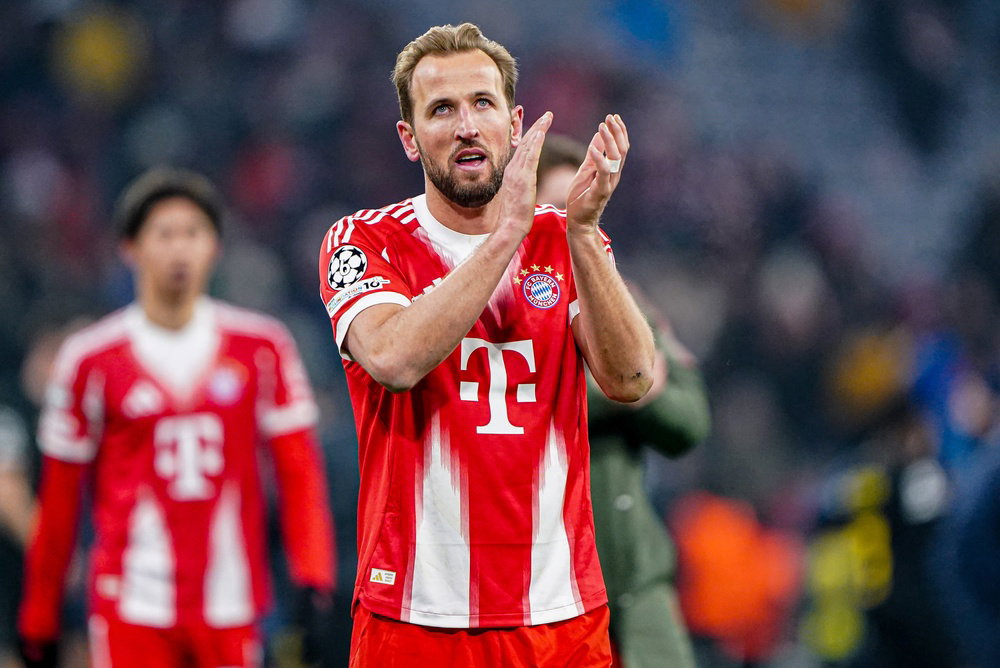
Kane left Tottenham for Bayern Munich in 2023 after 19 years at the north London club. He has scored 156 goals and registered 40 assists in 159 matches for Bayern, winning five trophies, including two league titles. The figures suggest his move did little to interrupt his scoring output. For Tottenham, his departure ended a long association; for Kane, it began another productive chapter at a club where he continued to deliver.
Soldado, who retired in 2023, said Kane’s success confirmed what he saw in training years earlier: “Those of you who knew he was something special weren’t wrong, because look, even now, and it’s been quite a while, he’s still a world-class striker.” It’s an unusually generous reflection from someone who describes being hurt by the same rise. The praise doesn’t erase the frustration; it makes clear that Soldado could recognize Kane’s talent while struggling with what that talent meant for his own place in the side.
What the story says about opportunity
For Soldado, the defining detail wasn’t a single breakthrough performance. It was Kane turning brief opportunities into goals until the minutes, and the team’s attention, shifted decisively his way. That’s more significant than it looks: a player’s status can change through a sequence of small decisions, each backed by what happens on the pitch. A substitute appearance becomes a reason to start; another goal makes it harder to leave him out.
Here’s the thing: a squad’s hierarchy is often described through labels such as first choice and backup, but those labels can hide how quickly the balance changes. Kane’s account at Tottenham, as Soldado tells it, is about repeated proof. And yet, the same process that rewards a rising player can leave another feeling displaced, even when the logic is plain. If you’re working in this space, that tension is familiar: opportunity is earned in public, while its cost is often felt privately.
(And this is the part most people overlook.) The story isn’t only that Kane became a star. It’s that Soldado remembers the early signs clearly, including the moments when Kane still had to earn minutes. A rocket, in this telling, starts with small bursts of acceleration.